Digital infrastructure
The cloud is built on land. Data centers are reinforced concrete buildings that require space, power, and fiber optics, and with the rise of artificial intelligence, that demand is growing. We develop the sites for these facilities, from initial site analysis to investment readiness: first working with the landowner and the local municipality, then with the operator.
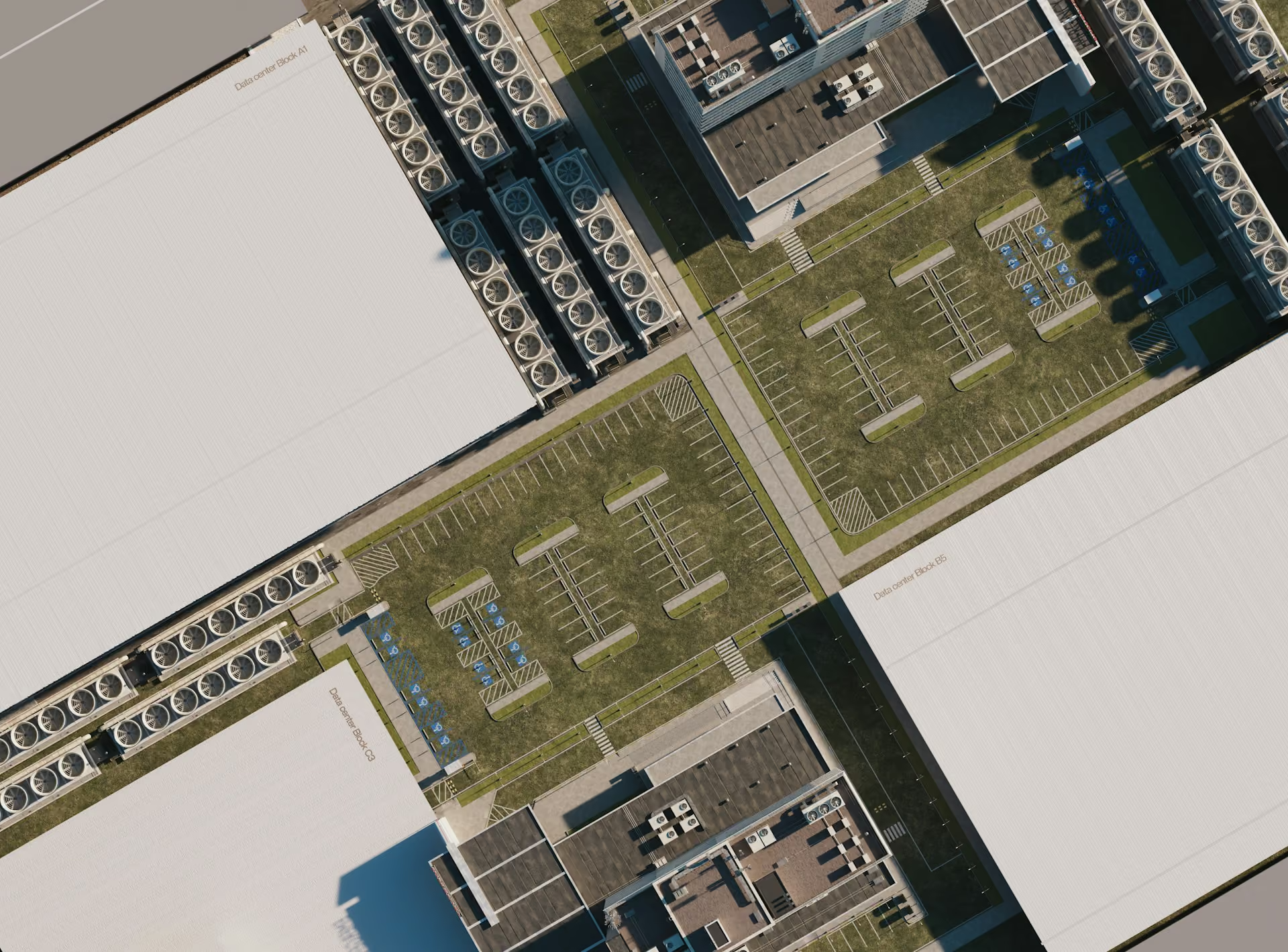
We are currently developing data center sites spanning several hundred hectares across multiple European countries.
How we assess sites
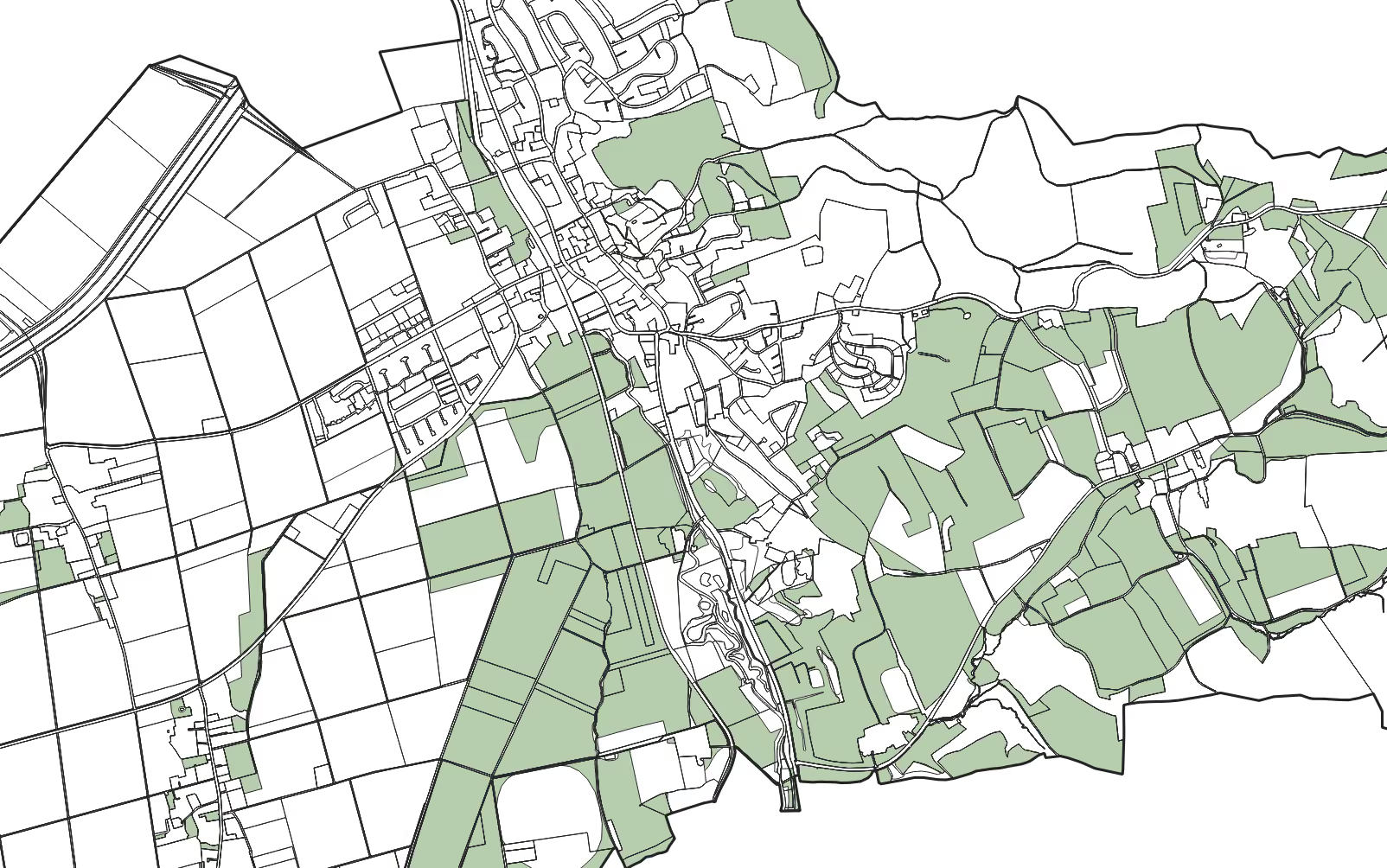
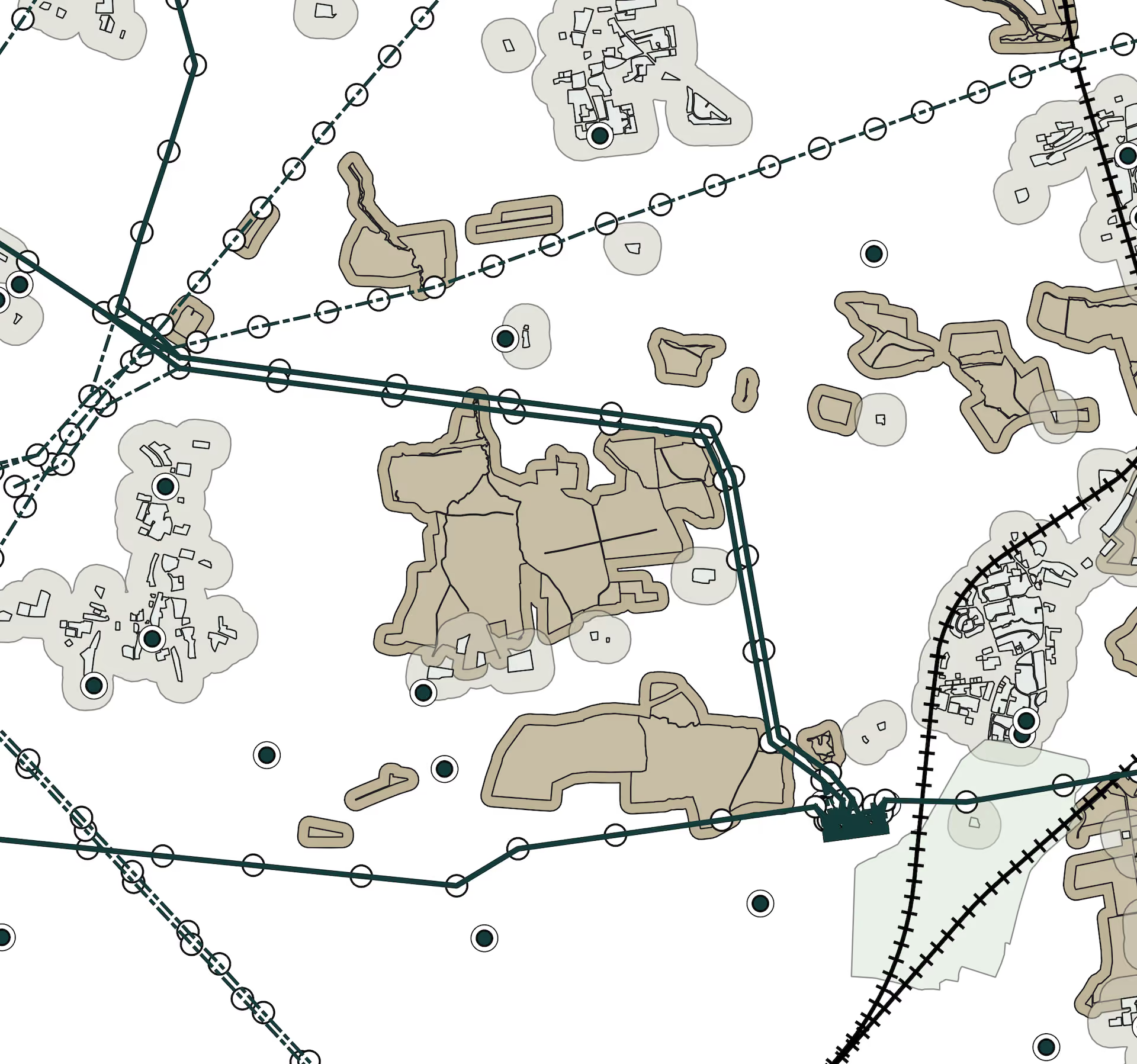
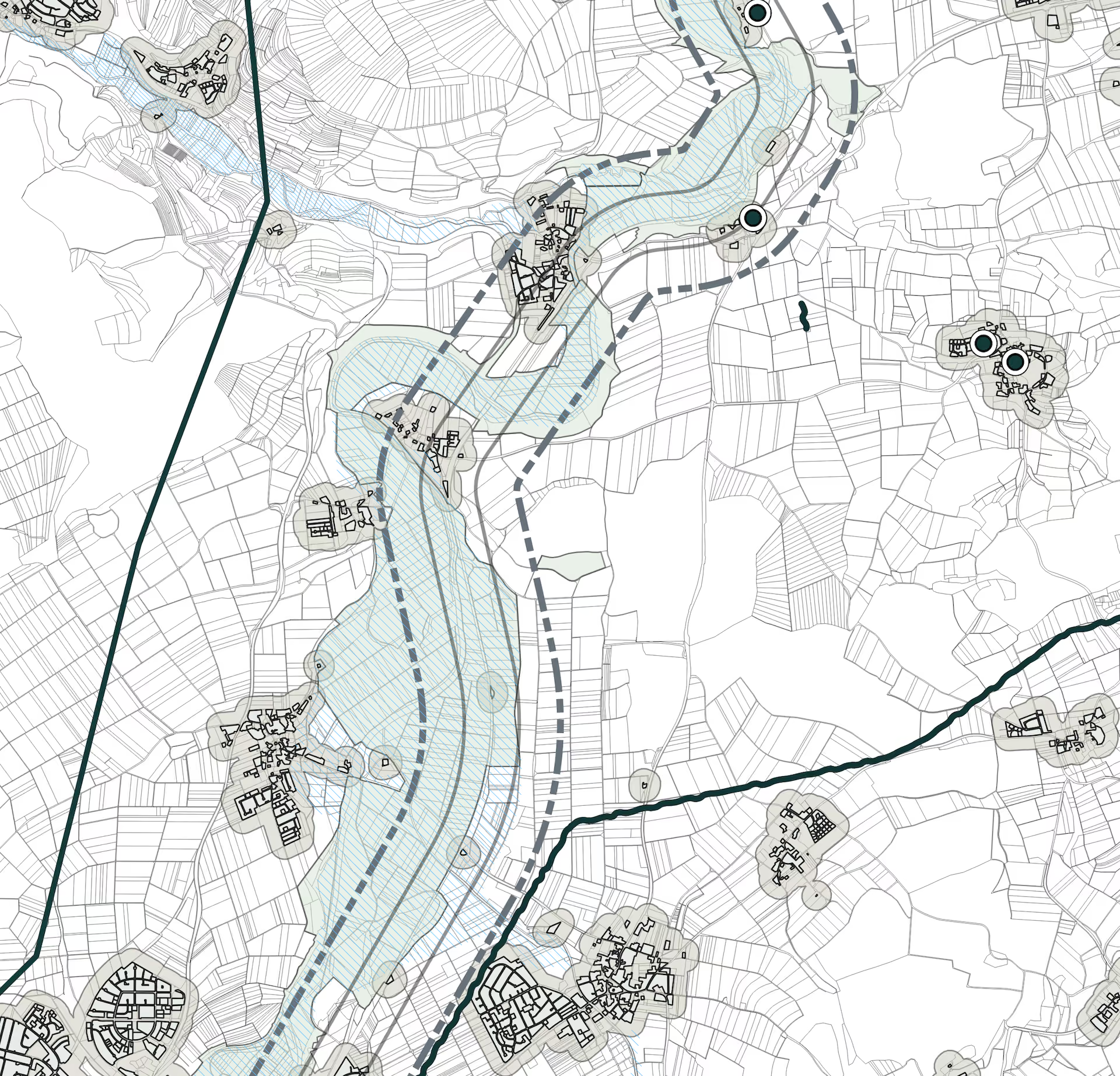
A data center requires land, power, and fiber optics. We assess the land using GIS, and power and fiber optics in coordination with grid operators and fiber providers. The size and layout of a site are determined by the available power capacity.
Six steps to investment readiness
Identification
Every site begins with a plot of land and an owner who wants to give it a future. Using GIS, we assess whether the surrounding area offers potential for a data center in terms of land, power grid, and fiber optics.
Coordination
We involve mayors and local councils early on, make complex issues understandable, and support the municipality in setting its own guidelines.
Qualification
We examine land, power capacity, grid connection, fiber optics, and planning law in detail, in collaboration with grid operators and fiber providers. The result is a solid foundation for further development.
Development
Within these guidelines, we make the site robust: securing land, grid connection, planning and permitting, waste heat utilization, and project and usage rights. With each step, risk decreases and the site's value increases.
Selection
We evaluate potential operators and investors based on site requirements, municipal guidelines, as well as their experience and financial strength. The site determines the operator.
Handover
The end result is an investment-ready site: solid development progress, reduced risks, and an operator ready to invest and build.
Creating value where a data center is built.
Those who provide the land and make the decisions should also benefit. We clarify early on what a data center brings to the municipality, the owner, and the region, and make this the benchmark for selecting the operator.
Municipality
Starting in 2027, the majority of trade tax from a data center is expected to go to the municipality where it is located, similar to the current practice for solar parks. We clarify with the municipality whether the operator will also establish its headquarters locally before we select them.
Landowners
Landowners learn the value of their property for a data center and have a say in what is developed on it. They secure long-term, predictable revenue from the appreciation of their land, and this value increases with every step of development, from grid connection to building permits.
Region
A regional data center keeps data and computing power within the country. From 2027, it must run entirely on renewable energy and make its waste heat usable. We therefore assess the site early on to determine where renewable energy can be generated locally and where the waste heat can be directed: to businesses, residential areas, or heating networks.
Direct line
Book an appointment directly, write to us, or give us a call.